
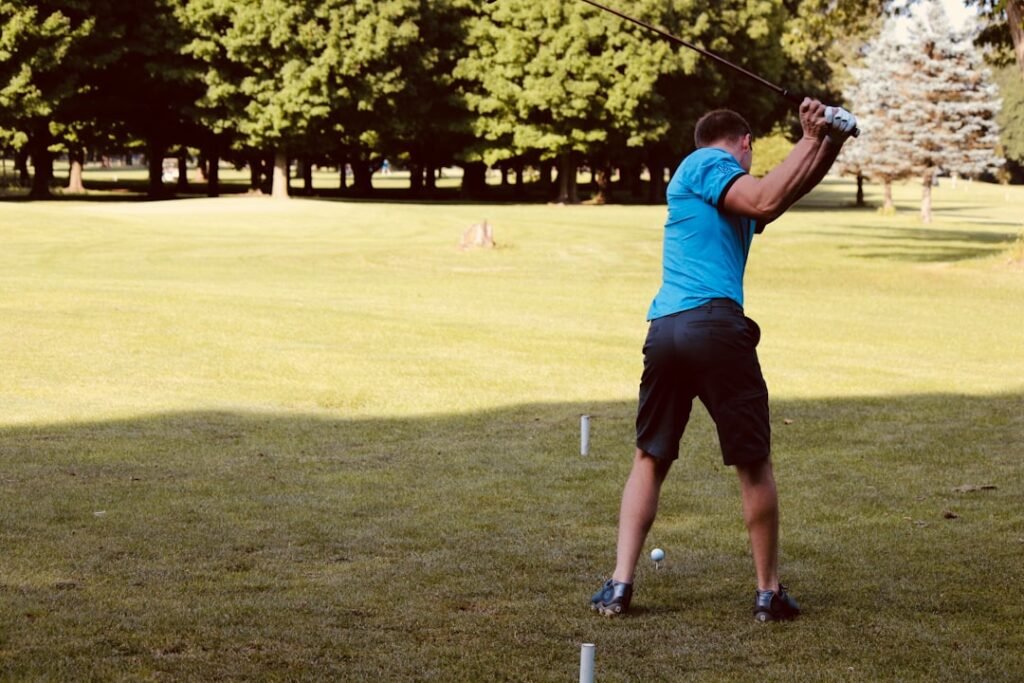
Golf performance improvement requires more than technical skill development—it demands a comprehensive fitness foundation that can be effectively built through targeted home exercise programs. Golf-specific home workouts address the sport’s unique physical requirements by developing strength, flexibility, and endurance that directly translate to improved swing mechanics and course performance. The recognition of fitness as a critical component in golf has evolved significantly.
Modern understanding positions golf as a physically demanding sport requiring dedicated conditioning rather than viewing it as purely recreational activity. Structured home workout programs can enhance physical capabilities, minimize injury risk, and improve overall game enjoyment. This guide examines the essential components of golf-specific home fitness training and provides practical implementation strategies for performance enhancement.
Key Takeaways
- Golf-specific home workouts enhance performance by targeting key muscle groups and movements used in the sport.
- Warm-up, strength, flexibility, and cardiovascular exercises are essential components for improving a golfer’s fitness.
- Core strength, balance, and stability training are crucial for maintaining control and power during swings.
- Using specialized equipment can optimize home workouts tailored to golf needs.
- Consistency and motivation are key to successfully integrating golf fitness routines into daily life.
Importance of Fitness for Golfers
Fitness plays a crucial role in our performance as golfers. A well-rounded fitness routine not only enhances our physical abilities but also contributes to our mental focus and resilience on the course. When we are fit, we can maintain our energy levels throughout a round, allowing us to concentrate on our game without being hindered by fatigue.
Moreover, improved fitness can lead to better swing mechanics, resulting in increased distance and accuracy. Additionally, being physically fit helps us prevent injuries that can arise from repetitive motions and the physical demands of swinging a club. By strengthening our muscles and improving our flexibility, we can protect ourselves from common golf-related injuries such as lower back pain or shoulder strains.
As we prioritize fitness in our training regimen, we are investing in our longevity in the sport, ensuring that we can enjoy golf for years to come.
Warm-Up Exercises for Golfers

Before we hit the course or begin our practice sessions, it is essential to warm up properly. Warm-up exercises prepare our bodies for the physical demands of golf by increasing blood flow to our muscles and enhancing our range of motion. A good warm-up routine should include dynamic stretches and movements that mimic the actions we will perform during our swings.
One effective warm-up exercise is the torso twist. By standing with our feet shoulder-width apart and rotating our upper body from side to side, we engage our core and improve spinal mobility. Another beneficial warm-up is the arm circle, where we extend our arms out to the sides and make small circles, gradually increasing their size.
This exercise helps loosen up our shoulders and prepares them for the repetitive motion of swinging a club. Incorporating these warm-up exercises into our routine will not only enhance our performance but also reduce the risk of injury.
Strength Training for Golfers
Strength training is a vital component of any golfer’s fitness regimen. By focusing on specific muscle groups used in golf, we can develop the power needed for a more explosive swing. Key areas to target include the legs, core, and upper body.
Exercises such as squats and lunges help build leg strength, while push-ups and rows enhance upper body power. Incorporating resistance bands or dumbbells into our strength training routine can further amplify our results. For instance, performing banded rotations mimics the twisting motion of a golf swing while engaging our core muscles.
Additionally, deadlifts are an excellent exercise for developing overall strength and stability, which are crucial for maintaining balance during our swings. By committing to a consistent strength training program, we can significantly improve our performance on the course.
Flexibility and Mobility Exercises for Golfers
| Workout Type | Target Muscle Groups | Duration | Frequency per Week | Benefits for Golf |
|---|---|---|---|---|
| Core Stability Exercises | Abdominals, Obliques, Lower Back | 15-20 minutes | 3-4 times | Improves swing power and balance |
| Rotational Strength Training | Obliques, Shoulders, Hips | 20-25 minutes | 2-3 times | Enhances swing rotation and control |
| Lower Body Strength | Glutes, Quads, Hamstrings, Calves | 20-30 minutes | 2-3 times | Increases stability and power in the swing |
| Flexibility & Mobility | Hips, Shoulders, Spine | 10-15 minutes | Daily | Improves range of motion and reduces injury risk |
| Balance Training | Core, Ankles, Legs | 10-15 minutes | 3-4 times | Enhances stability during swing and stance |
Flexibility and mobility are often overlooked aspects of fitness for golfers, yet they are essential for achieving an effective swing. Improved flexibility allows us to achieve a greater range of motion, which translates into more powerful swings and better shot accuracy. Incorporating stretching exercises into our routine can help us maintain optimal flexibility.
One effective flexibility exercise is the standing quadriceps stretch, where we pull one foot towards our glutes while standing on the opposite leg. This stretch targets the quadriceps and hip flexors, which are crucial for maintaining proper posture during a swing. Another beneficial exercise is the seated hamstring stretch, which helps lengthen the hamstrings and lower back muscles.
By dedicating time to flexibility and mobility exercises, we can enhance our overall performance and reduce the risk of injury.
Cardiovascular Workouts for Golfers
While golf may not seem like an intense cardiovascular workout, maintaining good cardiovascular health is essential for endurance on the course. A strong cardiovascular system allows us to sustain energy levels throughout an entire round of golf, preventing fatigue from affecting our performance. Incorporating cardiovascular workouts into our routine can take many forms, from running and cycling to swimming or even brisk walking.
Interval training is particularly effective for golfers as it mimics the stop-and-go nature of playing a round. For example, we can alternate between periods of high-intensity activity—such as sprinting—and lower-intensity recovery periods—like walking or jogging. This type of training not only improves cardiovascular fitness but also enhances our ability to recover quickly between shots on the course.
Core Strengthening Exercises for Golfers
The core is often referred to as the powerhouse of the body, and for good reason. A strong core is essential for maintaining stability during our swings and generating power through rotation. Core strengthening exercises should be a staple in our golf-specific workout routine.
Planks are an excellent exercise for building core strength as they engage multiple muscle groups simultaneously. We can perform variations such as side planks or plank rotations to target different areas of the core. Another effective exercise is the medicine ball rotational throw, which mimics the twisting motion of a golf swing while enhancing core stability and power.
By focusing on core strengthening exercises, we can improve our balance and control during swings, leading to better performance on the course.
Balance and Stability Training for Golfers
Balance and stability are critical components of a successful golf swing. Without proper balance, we risk losing power and accuracy in our shots. Incorporating balance training into our workout routine can significantly enhance our performance on the course.
One effective balance exercise is standing on one leg while performing arm movements or holding weights. This challenges our stability while engaging various muscle groups simultaneously. Additionally, using a balance board or stability ball can further enhance our training by forcing us to engage our core muscles while maintaining balance.
By dedicating time to balance and stability training, we can improve our overall control during swings and reduce the risk of injury.
Golf-Specific Exercise Equipment for Home Studios
Creating a golf-specific home workout space can greatly enhance our training experience. Investing in equipment tailored to golfers allows us to perform targeted exercises effectively. Some essential items include resistance bands, dumbbells, stability balls, and balance boards.
Resistance bands are particularly versatile as they can be used for strength training, flexibility exercises, and even rehabilitation work. Dumbbells allow us to perform various strength exercises that target key muscle groups used in golf. Stability balls can be utilized for core workouts and balance training, while balance boards challenge our stability in a fun way.
By equipping ourselves with these tools, we can create an effective home workout environment that caters specifically to our golfing needs.
Creating a Golf-Specific Workout Routine
To maximize our progress as golfers, it is essential to create a structured workout routine that incorporates all aspects of fitness relevant to the sport. A well-rounded program should include warm-up exercises, strength training sessions, flexibility work, cardiovascular workouts, core strengthening exercises, and balance training. We can start by setting specific goals based on our individual needs—whether it’s improving swing speed or enhancing endurance on the course—and then design a weekly schedule that incorporates these elements consistently.
For example, we might dedicate certain days to strength training while reserving others for flexibility or cardiovascular workouts. By following a structured routine tailored to our goals, we can ensure steady progress in our fitness journey.
Tips for Staying Motivated and Consistent with Home Workouts
Staying motivated during home workouts can be challenging at times; however, there are several strategies we can employ to maintain consistency in our training regimen. One effective approach is setting realistic goals that are both achievable and measurable. By tracking our progress over time—whether it’s through improved strength or increased flexibility—we can celebrate small victories that keep us motivated.
Additionally, incorporating variety into our workouts can help prevent boredom from setting in. Trying new exercises or changing up routines keeps things fresh and exciting while ensuring that we continue challenging ourselves physically. Finally, finding a workout buddy or joining online communities focused on golf fitness can provide accountability and support as we work towards improving our game together.
In conclusion, embracing golf-specific home workouts is an essential step toward enhancing our performance on the course. By prioritizing fitness through targeted exercises that focus on strength, flexibility, cardiovascular health, core stability, and balance training, we position ourselves for success in this demanding sport. With dedication and consistency in our training routines—and by utilizing appropriate equipment—we can elevate not only our game but also our enjoyment of golf itself.
For those looking to enhance their golf game, incorporating golf-specific workouts alongside practice can be incredibly beneficial. A great resource to consider is the article on the most effective golf drills you can do in a small space without expensive gear, which provides practical exercises that can be easily integrated into your home studio fitness routine. By combining these drills with targeted workouts, you can improve your strength, flexibility, and overall performance on the course.
FAQs
What is home studio fitness for golf?
Home studio fitness for golf refers to exercises and workout routines designed specifically to improve golf performance, which can be done in a dedicated space at home. These workouts focus on enhancing strength, flexibility, balance, and endurance relevant to the golf swing and overall game.
Why should golfers incorporate fitness workouts alongside their practice?
Incorporating fitness workouts helps golfers improve their physical conditioning, reduce the risk of injury, increase swing power, and enhance flexibility and balance. This leads to better performance on the course and a more consistent golf game.
What types of exercises are included in golf-specific workouts?
Golf-specific workouts typically include strength training (focusing on core, legs, and upper body), flexibility exercises, balance drills, and cardiovascular conditioning. Common exercises include rotational movements, planks, lunges, squats, and stretches targeting the hips, shoulders, and back.
Can I do golf-specific workouts without expensive equipment?
Yes, many golf-specific workouts can be done with minimal or no equipment. Bodyweight exercises, resistance bands, and simple tools like a stability ball or dumbbells are often sufficient for an effective home studio fitness routine.
How often should I do golf-specific workouts at home?
It is generally recommended to perform golf-specific workouts 2-4 times per week, depending on your fitness level and practice schedule. Consistency is key to seeing improvements in strength, flexibility, and overall golf performance.
Are there any safety tips for doing golf workouts at home?
Yes, always warm up before starting your workout, use proper form to avoid injury, start with lighter intensity if you are a beginner, and listen to your body. If you have any pre-existing conditions or injuries, consult a healthcare professional before beginning a new fitness routine.
How do golf-specific workouts improve my swing?
These workouts target the muscles and movements used in the golf swing, improving strength, flexibility, and coordination. This can lead to increased swing speed, better control, and more consistent ball striking.
Can golf-specific fitness help with injury prevention?
Yes, by strengthening muscles, improving flexibility, and enhancing balance, golf-specific fitness routines can reduce the risk of common golf-related injuries such as lower back pain, shoulder strains, and wrist issues.
Is it necessary to have a large space for a home studio golf workout?
No, a small dedicated area with enough room to move freely and perform exercises safely is sufficient. Many golf-specific workouts can be adapted to fit limited spaces.
Where can I find guided golf-specific workout routines for home?
Guided routines can be found through golf fitness websites, apps, YouTube channels, and fitness professionals specializing in golf training. Some golf instructors also offer integrated fitness programs tailored to golfers.