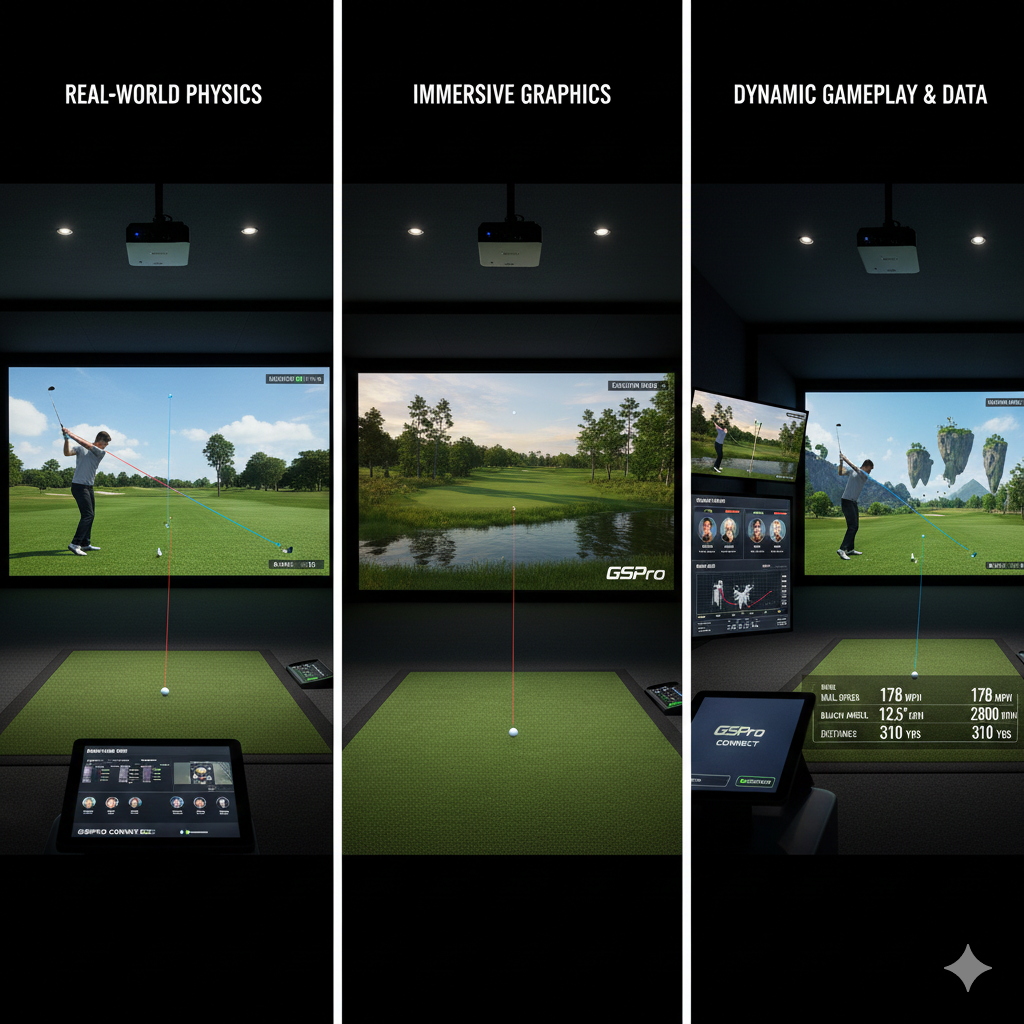
Ceiling height is an important factor in designing a home golf studio that supports effective practice. The vertical space available directly affects a golfer’s ability to complete full swings without restriction. Low ceilings can create a confined feeling that disrupts the natural swing motion, potentially leading to frustration and less productive practice sessions.
Higher ceilings allow for a more comfortable stance and swing, which helps golfers develop proper technique and build muscle memory. Ceiling height also affects ball trajectory. A higher ceiling provides adequate space for the ball to travel upward and downward without hitting obstacles, which is essential when practicing different shot types, including drives and high-lofted approaches.
This becomes particularly relevant when simulating real-course conditions, where golfers must practice shots at various elevations. Therefore, selecting an appropriate ceiling height is a key consideration when building a home golf studio that supports skill development and consistent practice.
Key Takeaways
- Ceiling height is essential for comfort and functionality in a home golf studio.
- Minimum ceiling height should consider golfer’s height, club length, and swing plane.
- A 9-foot ceiling is recommended to allow full swings and ball flight clearance.
- Low ceilings can restrict swings, limit club use, and risk damage to the space.
- Solutions for low ceilings include shorter clubs, swing adjustments, hitting nets, and professional design advice.
Factors to Consider When Determining Ceiling Height
Determining the appropriate ceiling height for a home golf studio involves several critical factors that cater to the individual golfer’s needs. One of the primary considerations is the golfer’s height. Taller golfers require more vertical space to accommodate their natural swing arc, while shorter golfers may have different requirements.
Additionally, the length of the clubs being used plays a significant role in this equation. Standard driver lengths can range from 44 to 46 inches, and when combined with the golfer’s height and swing mechanics, this can necessitate a higher ceiling to prevent any contact with overhead structures. Another essential factor is the swing plane, which varies from golfer to golfer based on their unique style and technique.
A golfer with a more upright swing plane will need additional clearance compared to someone with a flatter swing. This variability underscores the importance of personalized assessments when determining ceiling height. Furthermore, considering the type of practice equipment being used—such as simulators or launch monitors—can also influence the required ceiling height.
These devices often need extra space for accurate readings and optimal performance, making it imperative to account for them in the design process.
Recommended Minimum Ceiling Height for a Home Golf Studio
Experts generally recommend a minimum ceiling height of 9 feet for a home golf studio to ensure that golfers can practice effectively without restrictions. This height allows for a full range of motion during swings, accommodating both tall and short golfers alike. With 9 feet of clearance, golfers can comfortably execute their swings without worrying about hitting the ceiling or feeling cramped in their practice space.
This recommendation is particularly relevant for those who wish to use standard-length clubs, as it provides enough vertical space for both the club’s arc and the ball’s flight path. In addition to accommodating swings, a 9-foot ceiling height also allows for various practice scenarios, including full swings with drivers and other clubs that require significant upward motion. This height ensures that golfers can practice their shots realistically, mirroring conditions they would encounter on an actual golf course.
Furthermore, having adequate ceiling height can enhance the overall experience by allowing for better lighting options and ventilation, creating a more pleasant environment for extended practice sessions.
Consequences of Inadequate Ceiling Height
The repercussions of inadequate ceiling height in a home golf studio can be significant and multifaceted. One of the most immediate consequences is the restriction it places on a golfer’s swing. When ceilings are too low, golfers may find themselves altering their natural swing mechanics to avoid contact with overhead structures.
This forced adjustment can lead to poor technique, resulting in inconsistent ball striking and diminished performance over time. Additionally, limited swing freedom can hinder a golfer’s ability to practice effectively, as they may not be able to replicate their full range of motion. Moreover, inadequate ceiling height can limit club selection, forcing golfers to use shorter clubs or modify their swings in ways that are not conducive to their overall game improvement.
This limitation can stifle progress and lead to frustration, as golfers may feel they are unable to practice effectively or develop their skills fully. Furthermore, there is also the risk of physical damage; repeated contact with the ceiling can lead to unsightly marks or even structural damage over time. Equipment such as launch monitors or simulators may also be at risk if they are positioned too close to low ceilings, potentially leading to costly repairs or replacements.
Options for Low Ceiling Heights
| Aspect | Recommended Minimum Height | Notes |
|---|---|---|
| Ceiling Height for Swing Clearance | 9 feet (2.74 meters) | Allows full swing for most golfers without obstruction |
| Ceiling Height for Driver Shots | 10 feet (3.05 meters) | Recommended for practicing driver shots with high ball flight |
| Ceiling Height for Iron Shots | 8.5 feet (2.59 meters) | Minimum height for practicing iron shots comfortably |
| Ceiling Height for Simulator Screen | 8 feet (2.44 meters) | Minimum height to mount projector and screen without interference |
| Additional Clearance for Lighting and Equipment | 1 foot (0.3 meters) | Extra space recommended for lighting fixtures and sensors |
For homeowners dealing with low ceiling heights, there are several strategies that can be employed to create a functional home golf studio without compromising on practice quality. One effective approach is to use shorter clubs specifically designed for indoor use or for golfers with limited vertical space. These clubs allow golfers to maintain a more natural swing while accommodating the constraints of their environment.
Additionally, adjusting swing mechanics can also be beneficial; golfers may focus on developing a flatter swing plane that minimizes upward motion while still allowing for effective ball striking. Another viable option is to install a hitting net or screen that can absorb impact while providing a safe environment for practice. These nets can be positioned lower than traditional setups, allowing golfers to practice without worrying about ceiling clearance.
Furthermore, utilizing technology such as simulators that require less vertical space can also enhance practice opportunities in low-ceiling environments. By incorporating these adjustments and tools, golfers can still enjoy an effective practice experience despite spatial limitations.
Design Considerations for Home Golf Studios with Low Ceilings

When designing a home golf studio with low ceilings, several key considerations must be taken into account to ensure functionality and safety. First and foremost is club selection; opting for shorter clubs or specialized indoor equipment can help mitigate issues related to limited vertical space. Additionally, golfers should consider adjusting their swing mechanics to accommodate their environment while still focusing on maintaining proper technique.
Impact-resistant flooring is another critical design element that should not be overlooked. In low-ceiling studios where swings may be restricted, having durable flooring that can withstand repeated impacts from golf balls is essential. Materials such as rubber or specialized turf can provide both protection and comfort during practice sessions.
Furthermore, incorporating adjustable lighting solutions can enhance visibility without taking up valuable vertical space; recessed lighting or wall-mounted fixtures can illuminate the area effectively while keeping the ceiling clear.
Tips for Maximizing Space in a Home Golf Studio
Maximizing space in a home golf studio with low ceilings requires strategic planning and creative solutions. One effective tip is to utilize compact swing trainers that allow golfers to practice their mechanics without needing extensive vertical clearance. These trainers often come in various forms, including portable devices that can be easily stored when not in use, making them ideal for smaller spaces.
Implementing efficient storage solutions is also crucial in optimizing space within the studio. Wall-mounted racks or cabinets can help keep equipment organized and accessible while freeing up floor space for practice activities. Additionally, optimizing the layout of the studio by positioning equipment strategically can create an open feel despite spatial limitations.
For instance, placing hitting mats closer to walls or corners can maximize usable area while still allowing for effective practice.
Professional Consultation for Home Golf Studio Design
For homeowners facing specific ceiling height limitations or those seeking to create an optimal home golf studio experience, consulting with professionals can provide invaluable insights and recommendations tailored to individual needs. Engaging with a professional golf instructor or studio designer can help identify unique requirements based on personal golfing style and preferences. These experts can offer guidance on ideal club selection, swing adjustments, and layout optimization based on available space.
Additionally, professionals can assist in navigating potential challenges associated with low ceilings by suggesting innovative design solutions that maximize functionality while maintaining an enjoyable practice environment. Their expertise can help homeowners avoid common pitfalls and ensure that their home golf studio meets both practical needs and aesthetic desires. By leveraging professional knowledge, golfers can create a space that not only accommodates their practice requirements but also enhances their overall enjoyment of the game.
When designing a home golf studio, one important consideration is the minimum ceiling height to ensure a comfortable and functional space for practice. For those looking to create an optimal indoor environment, it’s also essential to think about ventilation and climate control. You can find valuable insights on this topic in the article on ventilation and climate control for an indoor golf studio. This resource will help you understand how to maintain the right conditions for your golf practice area.
FAQs
What is the minimum ceiling height required for a home golf studio?
The minimum ceiling height for a home golf studio is generally recommended to be at least 9 feet (approximately 2.7 meters) to allow for a full golf swing without obstruction.
Why is ceiling height important in a home golf studio?
Ceiling height is important because it ensures that golfers can swing their clubs freely without hitting the ceiling, which could interfere with the swing and potentially cause damage or injury.
Can a home golf studio work with a ceiling height lower than 9 feet?
While it is possible to set up a golf simulator in a room with a ceiling lower than 9 feet, it may require modifications such as using shorter clubs, adjusting swing techniques, or installing specialized equipment designed for low ceilings.
What factors besides ceiling height should be considered when setting up a home golf studio?
Other important factors include room dimensions (length and width), lighting, flooring, ventilation, and space for the simulator screen and projector.
Is it necessary to have a professional install a home golf studio?
Professional installation is recommended to ensure proper setup, including correct ceiling height clearance, equipment calibration, and safety considerations.
How much space is needed around the golfer in a home golf studio?
A minimum of 10 feet in length and 12 feet in width is typically recommended to provide enough room for a comfortable swing and equipment placement.
Are there any alternatives if my ceiling height is too low for a traditional golf simulator?
Yes, alternatives include using golf nets with impact mats, putting simulators, or compact launch monitors designed for smaller spaces.
Does ceiling height affect the type of golf simulator equipment I can use?
Yes, some golf simulators require more vertical space for accurate ball tracking and swing analysis, so ceiling height can influence the choice of equipment.
Can I use a basement or garage for a home golf studio?
Yes, basements and garages are common locations for home golf studios, provided they meet the minimum ceiling height and space requirements.
What is the ideal ceiling height for professional-level golf simulation?
For professional-level simulation, a ceiling height of 10 feet or more is ideal to accommodate full swings and advanced tracking technology.