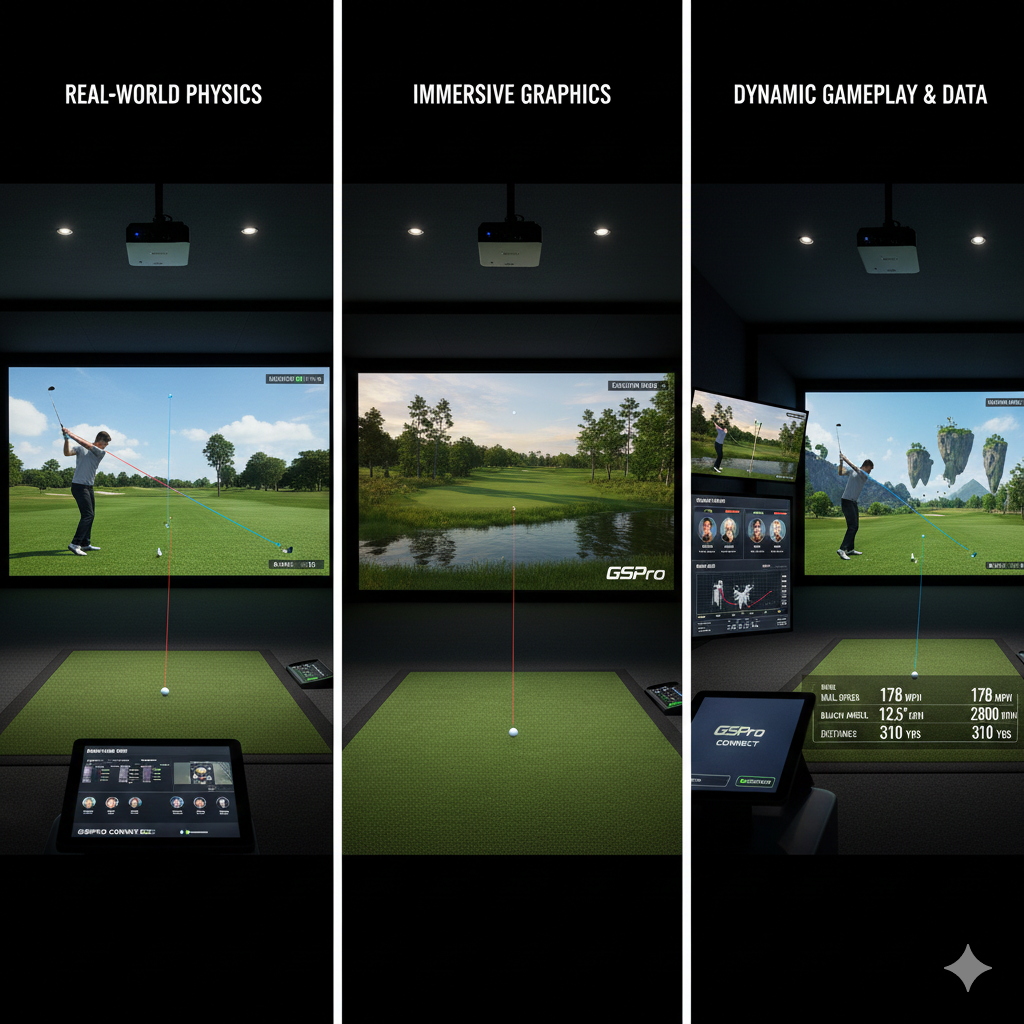
Golf simulators have revolutionized the way we experience the game of golf, allowing us to practice and play in the comfort of our own homes. These advanced systems use high-tech sensors and software to replicate the experience of being on a real golf course, providing us with an immersive environment where we can work on our swing, play virtual rounds, and even compete with friends. The benefits of golf simulators are numerous; they offer us the opportunity to practice year-round, regardless of weather conditions, and they can help us improve our skills by providing instant feedback on our performance.
As we delve deeper into the world of golf simulators, we can see a significant rise in their popularity among golfers of all skill levels. No longer confined to driving ranges or golf courses, we can now enjoy the game indoors, making it accessible for those who may not have the time or resources to play outside regularly. This growing trend is not just about convenience; it’s also about enhancing our overall golfing experience. With the ability to play famous courses from around the world and analyze our swings in real-time, golf simulators are becoming an essential tool for both casual players and serious golfers alike.
When considering the optimal room width and depth needed for golf simulators, it’s also essential to prioritize safety in your home setup. For valuable insights on how to protect yourself and your property while enjoying your golf simulator, you can refer to the article on home golf safety. This guide provides practical tips and precautions to ensure a secure environment for your golfing experience. To learn more, visit this article on home golf safety.
Key Takeaways
- Golf simulators allow indoor practice and play, growing in popularity among golfers.
- Minimum room size typically requires about 10 feet wide by 15 feet deep for proper setup.
- Room size needs vary based on simulator type, golfer’s swing, and ceiling height.
- Larger rooms provide a more realistic and comfortable golf simulation experience.
- Space optimization tips and solutions help overcome challenges in smaller rooms.
Minimum Room Width and Depth Requirements
When considering a golf simulator setup, one of the first aspects we need to address is the space required for installation. A minimum room width and depth are crucial for ensuring that we can fully enjoy the simulator experience without feeling cramped or restricted. Generally, a space that is at least 10 feet wide by 15 feet deep is recommended for a basic golf simulator setup. This allows enough room for the simulator equipment, as well as for us to take our swings without worrying about hitting walls or furniture.
However, while these dimensions serve as a guideline, it’s important to remember that our individual needs may vary based on our swing style and the specific simulator model we choose. A larger space can provide us with more freedom to move and swing comfortably, which can significantly enhance our overall experience. Therefore, when planning our golf simulator setup, we should carefully consider not just the minimum requirements but also how much space we can realistically allocate for this exciting addition to our home.
Factors Affecting Room Size
Several factors can influence the required room size for a golf simulator setup, and understanding these elements is essential for creating an optimal environment. One of the primary considerations is the type of simulator we choose. Some simulators require more space than others due to their design and technology. For instance, projection-based systems may need additional room for the projector and screen setup, while launch monitors might require less space but still necessitate adequate clearance for our swings.
Another critical factor is our swing style. Golfers with a more pronounced swing arc may need additional room to ensure they can execute their shots without obstruction. Additionally, ceiling height plays a significant role in determining how much space we need. A higher ceiling allows us to swing freely without worrying about hitting overhead fixtures or beams. Moreover, we should also account for extra space around the simulator for comfortable movement and equipment storage, which can further impact our room size requirements.
Recommended Room Size for Optimal Experience
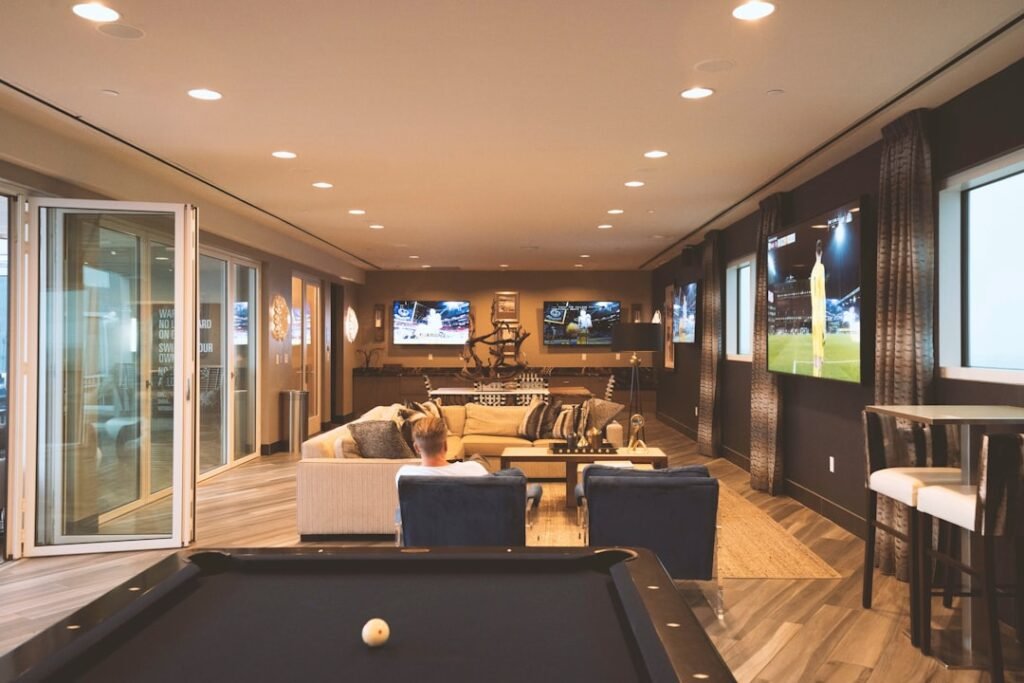
For those looking to create an ideal golf simulator setup, we recommend a room size of at least 12 feet wide by 18 feet deep. This additional space not only accommodates the simulator equipment but also provides us with ample room to move around comfortably while practicing our swings. A larger room enhances the overall experience by allowing us to set up additional features such as putting greens or seating areas for friends and family who may want to join us during our practice sessions.
Moreover, having a spacious environment contributes to a more realistic simulation experience. With more room to maneuver, we can replicate the feel of being on an actual golf course, which can be particularly beneficial when practicing different types of shots or playing virtual rounds. Ultimately, investing in a larger room for our golf simulator setup can lead to greater enjoyment and improved performance on the course.
When considering the optimal space for golf simulators, it’s also important to explore the differences between simulators and launch monitors, as both can significantly impact your practice experience. For a deeper understanding of which option might be the better investment for game improvement, you can read this insightful article on the topic. Understanding these differences can help you make an informed decision about the width and depth needed for your setup. Check out the article here for more details.
Tips for Maximizing Space
| Simulator Type | Minimum Room Width (ft) | Minimum Room Depth (ft) | Recommended Ceiling Height (ft) | Additional Notes |
|---|---|---|---|---|
| Basic Simulator | 10 | 12 | 8 | Suitable for casual play and practice |
| Mid-Range Simulator | 12 | 14 | 9 | Allows for more realistic swing and ball flight |
| High-End Simulator | 14 | 16 | 10 | Supports full swing and advanced tracking systems |
| Commercial Simulator | 16 | 20 | 12 | Designed for multiple users and professional setups |
For those of us working with limited space, maximizing our available area is essential for creating an effective golf simulator setup. One of the first tips we can implement is to choose a compact simulator model that requires less space while still providing accurate performance data. Many modern simulators are designed with smaller footprints in mind, making them ideal for tighter spaces.
Additionally, optimizing the layout of our room can make a significant difference in how effectively we use the available space. We should consider wall-mounted screens or retractable projectors that can be stored away when not in use. Arranging furniture strategically can also help create a more open environment, allowing us to swing freely without obstruction. By being creative with our setup and utilizing multifunctional furniture, we can make the most of even the smallest rooms.
When considering the ideal room width and depth needed for golf simulators, it’s also essential to be aware of common pitfalls that can arise during setup. For instance, you might find it helpful to read about the costly mistakes to avoid when establishing your home golf studio. This article provides valuable insights that can enhance your overall experience and ensure that your space is optimized for performance. You can check it out here.
Room Size Considerations for Different Types of Simulators
The type of golf simulator we choose will greatly influence the room size requirements. For instance, launch monitors typically require less space than projection-based systems because they often do not need a large screen or projector setup. However, even with launch monitors, we must ensure that there is enough room behind us for our swing and that we have adequate clearance in front of us for any projected data displays.
On the other hand, projection-based systems often necessitate larger spaces due to their need for both a screen and a projector positioned at a specific distance from the hitting area. This means that if we opt for this type of simulator, we should plan for additional depth in our room layout. Understanding these differences will help us make informed decisions about which simulator best fits our available space and golfing needs.
Potential Challenges and Solutions for Room Size Limitations
Setting up a golf simulator in a limited space can present several challenges, but there are effective solutions that allow us to overcome these limitations while still enjoying a quality experience. One common issue is insufficient ceiling height, which can restrict our ability to swing freely. In such cases, we might consider using shorter clubs during practice sessions or adjusting our swing technique to accommodate the lower ceiling.
Another challenge could be limited width or depth in our chosen room. To address this, we could explore portable or foldable simulator options that can be easily set up and taken down as needed. Additionally, using netting or impact screens that can be installed temporarily allows us to create a safe hitting area without permanently dedicating space to the simulator setup. By being resourceful and flexible in our approach, we can still enjoy the benefits of a golf simulator even in less-than-ideal conditions.
Conclusion and Final Recommendations
In conclusion, understanding the importance of room width and depth is crucial when setting up a golf simulator in our homes or indoor spaces. The right dimensions not only ensure that we have enough room to swing comfortably but also enhance our overall experience by allowing us to replicate real-life golfing conditions more accurately. As we consider our options for setting up a simulator, it’s essential to take into account factors such as ceiling height, swing style, and the specific type of simulator technology we plan to use.
For those looking to invest in a golf simulator setup, we recommend aiming for a room size of at least 12 feet wide by 18 feet deep for optimal performance and enjoyment. However, even if space is limited, there are numerous strategies we can employ to maximize what we have available. By being mindful of our choices and creative in our setups, we can create an enjoyable indoor golfing experience that allows us to practice and play all year round.
FAQs
What is the minimum room width required for a golf simulator?
The minimum room width for a golf simulator is typically around 10 to 12 feet. This allows enough space for the golfer to swing comfortably without hitting walls or other obstacles.
How much room depth is needed for a golf simulator?
A room depth of at least 15 to 20 feet is recommended to accommodate the golfer’s swing, the simulator screen, and the ball flight area.
Why is room height important for a golf simulator?
Room height is crucial because it needs to accommodate the full golf swing, including the club’s arc. A ceiling height of at least 9 to 10 feet is generally recommended.
Can a golf simulator fit in a smaller room?
While smaller rooms can sometimes be used, they may restrict the golfer’s swing and affect the simulator’s accuracy. Custom setups and compact simulators can help, but minimum space requirements should be met for optimal performance.
What factors influence the space needed for a golf simulator?
Key factors include the type of golf simulator, the golfer’s height and swing style, the size of the hitting area, and the screen or impact net dimensions.
Is additional space needed for accessories in a golf simulator room?
Yes, additional space may be required for accessories such as seating, storage for clubs, and electronic equipment like projectors or computers.
Can outdoor spaces be used for golf simulators?
Yes, outdoor spaces can be used if they provide sufficient room dimensions and protection from weather elements, but indoor rooms are generally preferred for consistent conditions.
How does room size affect the accuracy of a golf simulator?
Adequate room size ensures the golfer can swing naturally and the simulator can accurately track ball flight and club movement, leading to more precise feedback and a better experience.