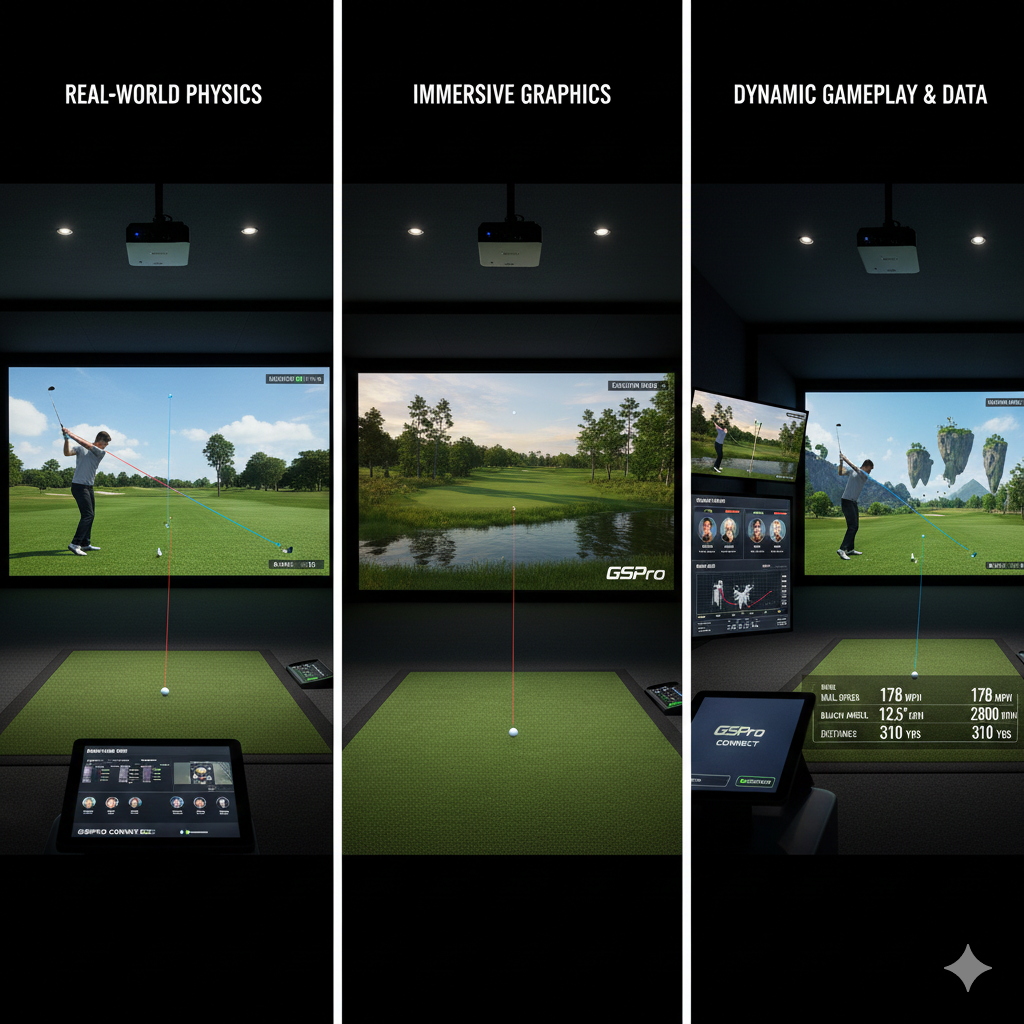
When installing a golf simulator yourself, you gain several practical advantages. Cost savings represent a primary benefit, as DIY installation eliminates professional service fees. These savings can be redirected toward higher-quality components such as advanced software or superior projection systems, ultimately improving simulation quality.
DIY installation also provides complete control over the process. You determine equipment selection and spatial configuration according to your specific requirements. This flexibility allows customization of your simulator environment, whether in a compact garage setting or a larger basement area.
The ability to design your space precisely to your specifications results in a more tailored golfing environment.
Key Takeaways
- DIY installation offers cost savings and customization flexibility but requires significant time and effort.
- Professional installation ensures higher quality, accuracy, and safety but comes at a higher price.
- DIY setups may lack advanced support and maintenance services available with professional installations.
- Time investment is considerably less with professional installation, ideal for those seeking convenience.
- Choosing between DIY and professional depends on budget, technical skill, desired quality, and long-term support needs.
The Drawbacks of DIY Golf Simulator Installation
While the allure of a DIY golf simulator installation is strong, it’s essential to consider the potential drawbacks. One significant challenge is the technical expertise required for a successful setup. If you’re not particularly tech-savvy, you may find yourself struggling with the installation process.
From calibrating sensors to ensuring proper connectivity between devices, the technical aspects can be daunting. This could lead to frustration and potentially result in a subpar experience if things don’t work as intended. Additionally, the time commitment involved in a DIY installation can be considerable.
You may underestimate how long it will take to research, purchase, and set up all the necessary components. This process can be time-consuming, especially if you encounter unexpected issues along the way. If you have a busy schedule or other commitments, dedicating hours to this project might not be feasible.
Ultimately, while DIY installations can be rewarding, they also require a significant investment of time and effort that may not align with your lifestyle.
The Benefits of Professional Golf Simulator Installation
Choosing professional installation for your golf simulator comes with its own set of advantages that can make the process smoother and more efficient. One of the primary benefits is the expertise that professionals bring to the table. They have extensive experience in setting up various systems and can ensure that everything is installed correctly and functions optimally.
This expertise can save you from potential pitfalls and technical issues that might arise during a DIY installation. Moreover, professional installers often provide a level of convenience that is hard to match. They handle all aspects of the installation process, from initial assessment to final setup, allowing you to focus on what truly matters: enjoying your golf simulator.
This means you won’t have to spend hours researching equipment or troubleshooting problems; instead, you can sit back and let the experts do their job. This convenience can be particularly appealing if you’re eager to start using your simulator without delay.
The Drawbacks of Professional Golf Simulator Installation
Despite the many benefits of professional installation, there are also drawbacks that you should consider before making your decision. One of the most significant downsides is the cost associated with hiring professionals. Installation fees can add up quickly, potentially pushing your overall budget beyond what you initially planned.
If you’re working with a limited budget, this added expense might make professional installation less appealing. Another drawback is the potential lack of customization during the installation process. While professionals are skilled at setting up systems efficiently, they may not fully understand your unique preferences or vision for your simulator space.
This could lead to a setup that doesn’t quite meet your expectations or desires. If you have specific ideas about how you want your simulator to look or function, relying on someone else to execute those ideas may not yield the results you hope for.
When weighing your options for golf simulator installation, cost is undoubtedly a crucial factor to consider. A DIY installation typically involves purchasing all necessary equipment and materials yourself, which can lead to significant savings compared to hiring professionals. You have the flexibility to shop around for deals and choose components that fit within your budget.
This approach allows you to prioritize spending on features that matter most to you while avoiding unnecessary expenses. On the other hand, professional installation comes with its own set of costs that can quickly add up. In addition to labor fees, you may also need to pay for any additional services or equipment that professionals recommend.
While this may seem like an investment in quality, it’s essential to evaluate whether those costs align with your budget and overall goals for your golf simulator setup. Ultimately, understanding the financial implications of both options will help you make an informed decision that suits your needs.
Time and effort are critical considerations when deciding between DIY and professional golf simulator installation. A DIY project often requires a significant time commitment, especially if you’re unfamiliar with the technology involved. You’ll need to dedicate time not only for research but also for purchasing equipment and physically setting everything up.
If you’re juggling work, family commitments, or other responsibilities, this time investment may feel overwhelming. In contrast, professional installation offers a more streamlined approach that saves you valuable time and effort. Professionals can typically complete installations much faster than an individual attempting it on their own, thanks to their experience and efficiency.
This means you can enjoy your golf simulator sooner rather than later, allowing you to get back to what you love—playing golf—without unnecessary delays.
The quality and accuracy of your golf simulator setup are paramount for an enjoyable experience. When it comes to DIY installations, achieving high-quality results can be challenging without proper knowledge and skills. If you’re not familiar with calibration techniques or how to optimize sensor placement, you may end up with a system that doesn’t perform as well as it should.
This could lead to inaccurate readings and a frustrating experience when trying to improve your game. On the other hand, professional installers bring expertise that ensures high-quality results from the outset. They understand how to set up equipment for optimal performance and accuracy, which can significantly enhance your overall experience.
With their knowledge, you can trust that your simulator will provide reliable data and realistic gameplay, allowing you to focus on honing your skills rather than troubleshooting technical issues.
Customization is another critical factor when considering golf simulator installation options. A DIY approach allows for maximum flexibility in designing your setup according to your preferences and available space. You have complete control over every aspect—from choosing specific software and hardware components to determining how everything fits together in your designated area.
This level of customization means you can create an environment that truly reflects your style and enhances your golfing experience. Conversely, while professional installers may offer some degree of customization, their focus is often on efficiency and standardization. They may have specific packages or setups they recommend based on their experience, which could limit your options if you have unique ideas in mind.
If personalization is essential to you, it’s crucial to communicate your vision clearly with professionals or consider whether a DIY approach might better suit your needs.
Maintenance and ongoing support are vital considerations when deciding between DIY and professional installation for your golf simulator. With a DIY setup, you’ll be responsible for all maintenance tasks, which can be both rewarding and challenging. While this gives you complete control over how often and when maintenance occurs, it also means you’ll need to invest time in learning about potential issues and how to resolve them effectively.
In contrast, professional installations often come with support services that can alleviate some of the burdens associated with maintenance. Many companies offer warranties or ongoing support packages that ensure assistance is available if problems arise down the line. This peace of mind can be invaluable, especially if you’re not particularly tech-savvy or if you’re concerned about troubleshooting issues on your own.
Safety is an essential aspect of any home project, including golf simulator installations. When opting for a DIY approach, it’s crucial to consider potential hazards associated with electrical components and equipment placement. If you’re not familiar with electrical safety protocols or proper mounting techniques, there’s a risk of accidents or damage during installation.
Professional installers are trained in safety standards and best practices for setting up equipment correctly and securely. They understand how to mitigate risks associated with electrical components and ensure that everything is installed safely within your space. By choosing professionals for your installation, you can have greater confidence in the safety of your setup.
Making the Right Choice for Your Golf Simulator Installation
| Aspect | DIY Installation | Professional Installation |
|---|---|---|
| Cost | Lower upfront cost; mainly equipment and materials | Higher upfront cost including labor and expertise |
| Time Required | Longer; can take several days depending on skill level | Shorter; typically completed within a day or two |
| Skill Level Needed | Moderate to high; requires some technical and construction skills | Low; handled by experienced professionals |
| Customization | Highly customizable based on personal preferences | Customizable but may be limited by professional packages |
| Quality of Setup | Variable; depends on installer’s expertise | Consistently high; professional-grade installation |
| Warranty & Support | Limited; usually only equipment warranty | Comprehensive; includes installation warranty and support |
| Tools & Equipment | Must be provided by the installer | Provided by the installation company |
| Risk of Errors | Higher; potential for mistakes affecting performance | Lower; professionals minimize errors |
| Learning Experience | High; opportunity to learn about setup and technology | Low; installation is handled by experts |
Ultimately, deciding between DIY and professional golf simulator installation comes down to personal preferences and circumstances. If you’re comfortable with technology and enjoy hands-on projects, a DIY approach may be fulfilling and cost-effective for you. However, if you’re looking for convenience, expertise, and peace of mind regarding quality and safety, professional installation might be worth the investment.
Consider factors such as budget constraints, time availability, desired customization levels, and technical proficiency when making your decision. By carefully weighing these elements against each other, you’ll be better equipped to choose an installation method that aligns with your goals and enhances your overall golfing experience at home.
When considering whether to tackle the installation of your golf simulator yourself or hire a professional, it’s also important to think about the overall environment of your home golf studio. For insights on creating the perfect atmosphere, check out our article on choosing the perfect lighting and sound system for your home golf studio. This resource can help you enhance your golfing experience, regardless of your installation choice.
FAQs

What are the main differences between DIY and professional installation of a golf simulator?
DIY installation involves setting up the golf simulator yourself, which can save money but requires time, technical skills, and tools. Professional installation is done by experts who ensure proper setup, calibration, and optimal performance, often at a higher cost.
How much does professional installation of a golf simulator typically cost?
Professional installation costs vary depending on the complexity of the simulator, room size, and additional features. On average, it can range from a few hundred to several thousand dollars.
What skills are needed for a successful DIY golf simulator installation?
DIY installation requires basic carpentry, electrical knowledge, and familiarity with the simulator’s software and hardware. Attention to detail and the ability to follow instructions are also important.
Can a DIY installation affect the accuracy and performance of a golf simulator?
Yes, improper installation can lead to inaccurate shot tracking, poor calibration, and reduced overall performance. Professional installers typically ensure the system is set up for optimal accuracy.
Is it possible to install a golf simulator in any room of the house?
Most rooms can accommodate a golf simulator, but adequate space, ceiling height, lighting, and electrical access are important factors. Some rooms may require modifications for optimal setup.
How long does it usually take to install a golf simulator professionally versus DIY?
Professional installation can take a few hours to a day, depending on complexity. DIY installation may take longer, especially for first-time installers, potentially spanning several days.
Are there any warranties or guarantees associated with professional installation?
Many professional installers offer warranties or satisfaction guarantees on their work, which can provide peace of mind. DIY installations typically do not come with such assurances.
Can I get technical support if I choose DIY installation?
Most golf simulator manufacturers provide technical support and detailed manuals for DIY installers. However, support may be limited compared to the hands-on assistance provided by professional installers.
What factors should I consider when deciding between DIY and professional installation?
Consider your budget, technical skills, available time, room suitability, and the importance of accuracy and performance. If unsure, consulting with a professional can help determine the best option.
Is professional installation necessary for all types of golf simulators?
Not necessarily. Some entry-level or portable simulators are designed for easy DIY setup, while high-end or custom systems often benefit from professional installation to ensure optimal functionality.