When establishing a home golf studio, defining the primary purpose is crucial. This purpose could be swing improvement, putting practice, or casual enjoyment. The intended use will inform all subsequent design and construction decisions.
Some individuals may require a technical training environment with performance analysis technology, while others might prefer a recreational space for relaxation and social interaction. The function of a home golf studio can also change over time. What begins as a dedicated practice area might later incorporate social elements, such as hosting friendly competitions or casual game nights.
By maintaining focus on core objectives, it’s possible to create an adaptable space that accommodates evolving needs while supporting both skill development and enjoyment of the game.
Key Takeaways
- Define the primary purpose of your home golf studio to guide design decisions.
- Evaluate available space carefully to optimize layout and functionality.
- Select appropriate flooring and lighting to enhance performance and comfort.
- Integrate storage, audio-visual equipment, and technology for a seamless experience.
- Add personal touches, comfortable seating, and consider natural light for an inviting atmosphere.
Assessing Available Space for Your Home Golf Studio
Once we have a clear understanding of our purpose, the next step is to assess the available space in our home. This involves evaluating different areas that could potentially serve as our golf studio. Whether it’s a spare room, a basement, or even a garage, we need to consider the dimensions and layout of the space.
We should take measurements to ensure that we have enough room for swings, putting greens, and any additional equipment we plan to incorporate. In addition to size, we must also consider the overall environment of the space. Is it well-ventilated?
Does it have adequate natural light? These factors can significantly impact our experience in the studio. If we find that our chosen area lacks sufficient height for a full swing or is too cramped for comfortable movement, we may need to rethink our options.
Ultimately, assessing available space is about finding the perfect balance between functionality and comfort, ensuring that our home golf studio meets our needs without feeling restrictive.
Designing the Layout for Your Home Golf Studio
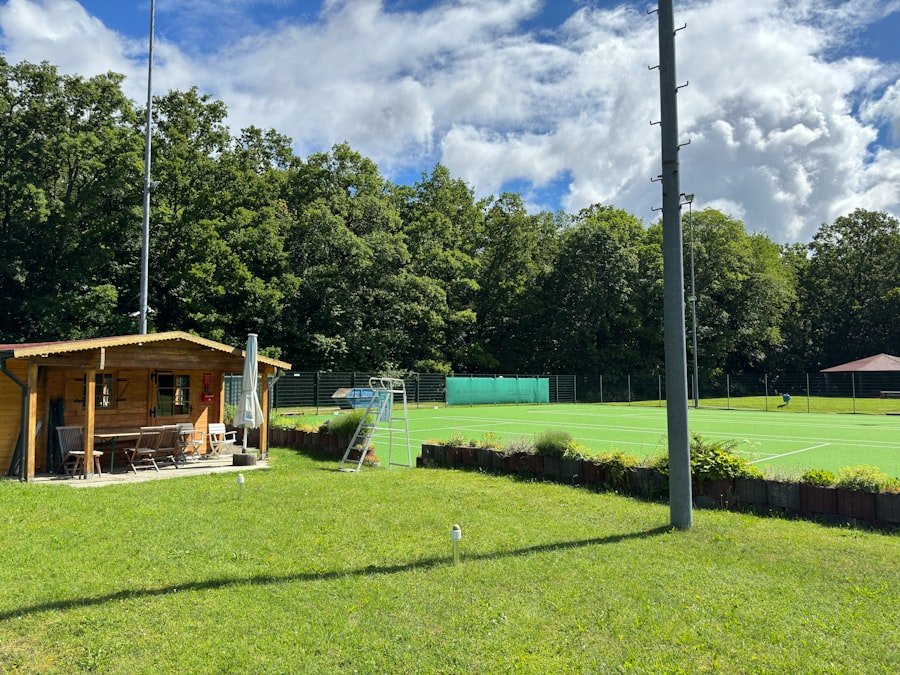
With a suitable space identified, we can now turn our attention to designing the layout of our home golf studio. This is where creativity meets practicality. We should start by sketching out a floor plan that includes designated areas for different activities—such as putting practice, full swings, and even a space for analyzing our performance using technology.
By clearly defining these zones, we can ensure that each aspect of our practice is easily accessible and organized. As we design the layout, it’s also important to consider flow and accessibility. We want to create an environment where we can move seamlessly from one area to another without feeling cramped or hindered.
This might involve placing putting greens near the entrance for quick access or positioning swing analysis equipment in a way that allows us to easily transition between practice modes. By thoughtfully designing the layout, we can create an efficient and enjoyable space that enhances our overall golfing experience.
Choosing the Right Flooring for Your Home Golf Studio
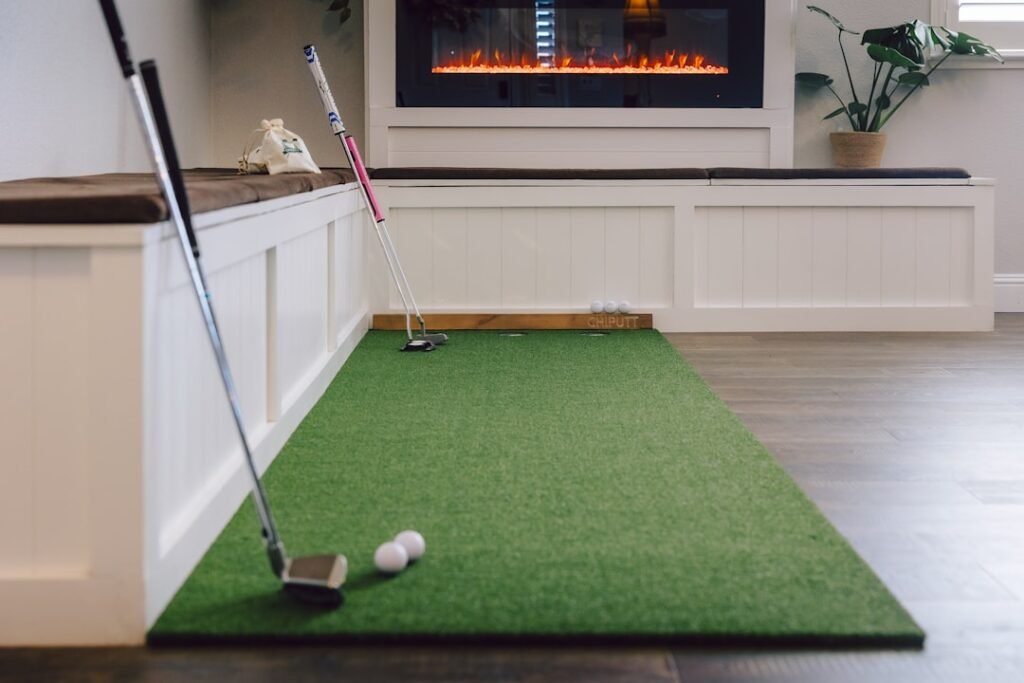
The choice of flooring in our home golf studio plays a crucial role in both functionality and aesthetics. We need to select materials that can withstand the wear and tear of regular practice while also providing a comfortable surface for our feet. Options such as artificial turf are popular for putting greens, as they mimic the feel of real grass and allow for realistic practice.
Additionally, rubber flooring can be an excellent choice for areas where we’ll be taking full swings, as it provides cushioning and reduces noise. Beyond practicality, we should also consider how the flooring complements the overall design of our studio. A cohesive look can enhance the atmosphere of the space, making it more inviting and enjoyable.
We might choose colors and textures that reflect our personal style while still being functional for golfing activities. Ultimately, selecting the right flooring is about finding a balance between performance and aesthetics, ensuring that our home golf studio is both effective and visually appealing.
Selecting the Best Lighting for Your Home Golf Studio
| Metric | Recommended Value | Notes |
|---|---|---|
| Room Dimensions | 12 ft (W) x 15 ft (L) x 9 ft (H) | Minimum space for swing clearance and equipment |
| Ceiling Height | 9 ft or higher | Allows for full swing without obstruction |
| Lighting | 5000 lumens (bright, even lighting) | Reduces shadows and improves sensor accuracy |
| Flooring | Shock-absorbent turf or rubber mat | Protects floor and provides realistic feel |
| Screen Size | 10 ft wide x 7 ft high | Optimal for immersive simulator experience |
| Projector Throw Distance | 12 ft | Distance from projector to screen for clear image |
| Ventilation | 6 air changes per hour | Maintains air quality during extended use |
| Power Outlets | 4-6 outlets | For simulator, lighting, and accessories |
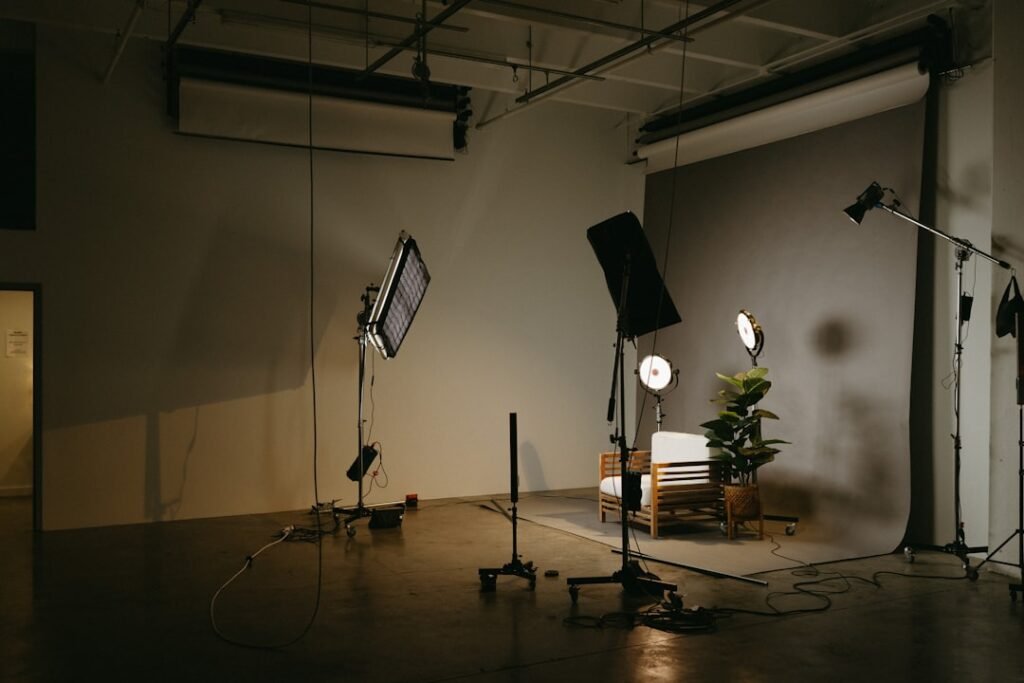
Lighting is another critical element in creating an effective home golf studio. Proper illumination not only enhances visibility but also sets the mood for practice sessions. We should aim for a combination of natural light and artificial lighting to create a well-lit environment.
If possible, positioning our studio near windows can allow us to take advantage of daylight during practice hours. However, we must also consider how to supplement this natural light with artificial sources for evening sessions. When selecting artificial lighting, we should focus on options that provide bright, even illumination without harsh shadows.
LED lights are an excellent choice due to their energy efficiency and longevity. Additionally, adjustable lighting fixtures can allow us to customize brightness levels based on our activities—whether we’re practicing putting or analyzing swing mechanics on video. By carefully considering our lighting choices, we can create an environment that enhances focus and performance while making our home golf studio feel welcoming.
Incorporating Storage Solutions in Your Home Golf Studio Layout
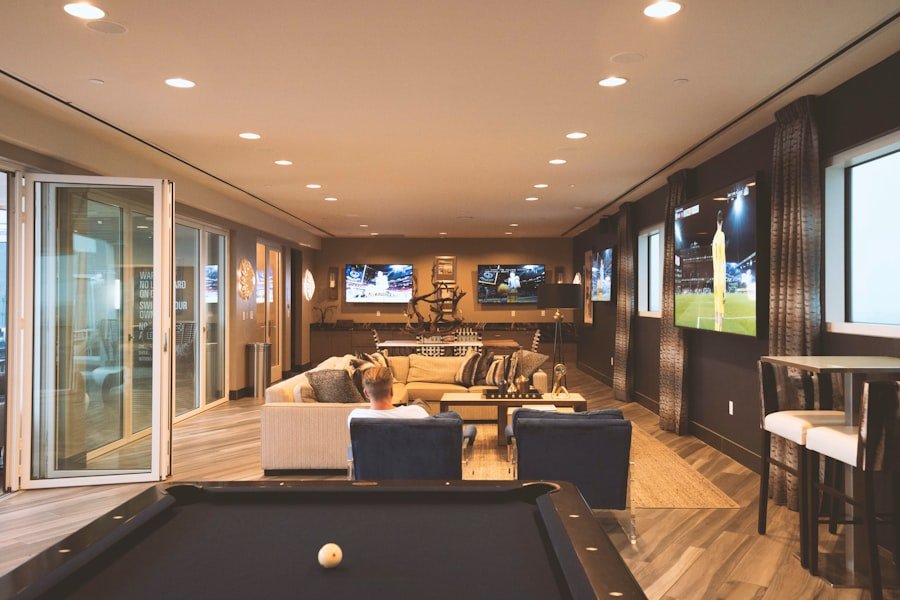
As we design our home golf studio, incorporating effective storage solutions is essential for maintaining organization and maximizing space. Golf equipment can quickly accumulate, from clubs and balls to training aids and accessories. We should consider built-in cabinets or shelving units that can neatly store these items while keeping them easily accessible during practice sessions.
Additionally, utilizing vertical space can be an effective way to manage storage without sacrificing floor area. Wall-mounted racks or hooks can hold clubs and bags off the ground while adding an element of style to the studio’s decor. By thoughtfully integrating storage solutions into our layout, we can create a clutter-free environment that allows us to focus on improving our game without distractions.
Planning for Audio and Visual Equipment in Your Home Golf Studio
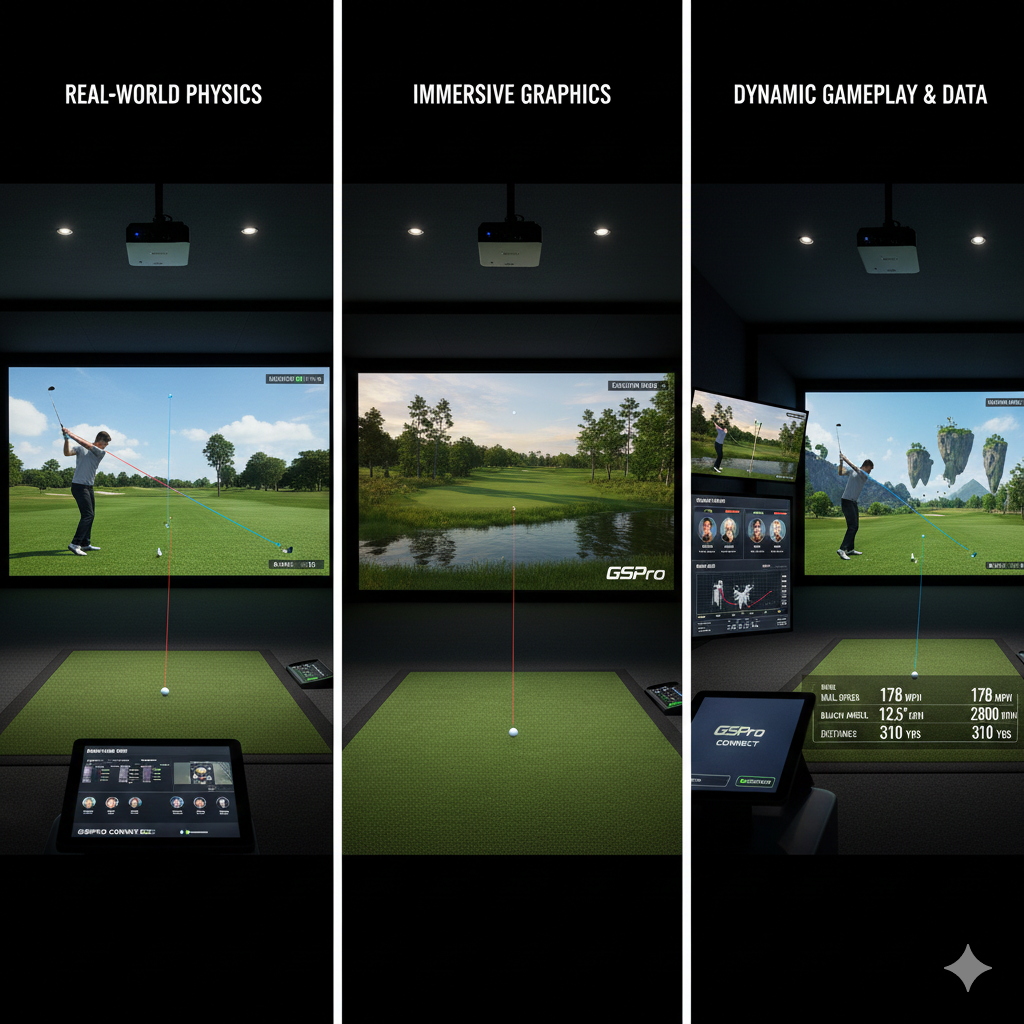
Incorporating audio and visual equipment into our home golf studio can significantly enhance our practice experience. Whether it’s using video analysis software to review our swings or listening to music to set the mood during practice sessions, technology plays a vital role in modern golfing environments. We should plan for adequate space and connectivity options for screens, projectors, or speakers within our layout.
When selecting audio-visual equipment, we should prioritize quality and functionality. High-definition screens can provide clear visuals for swing analysis, while quality speakers can deliver crisp sound for music or instructional videos. Additionally, ensuring that all equipment is easily accessible will allow us to seamlessly integrate technology into our practice routine without feeling overwhelmed by complicated setups.
Creating a Comfortable Seating Area in Your Home Golf Studio
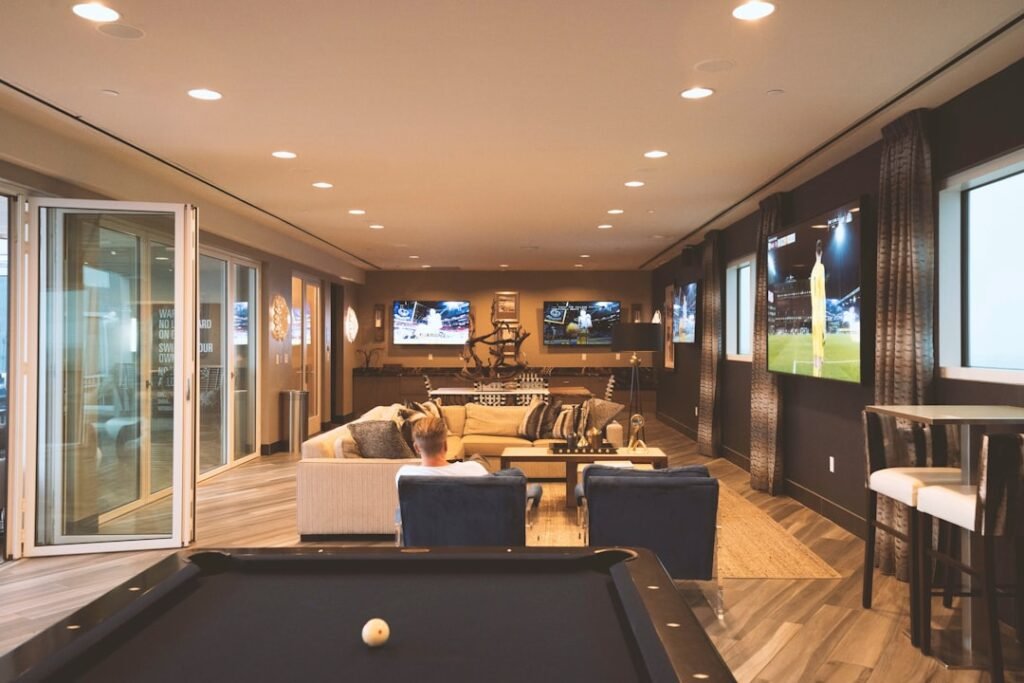
A comfortable seating area is an often-overlooked aspect of designing a home golf studio but can greatly enhance the overall experience. This space can serve multiple purposes: a place to relax after practice, an area for friends to gather during social events, or even a spot for us to review video footage of our swings in comfort. When designing this area, we should consider both comfort and style.
Choosing furniture that complements the overall aesthetic of our studio while providing ample comfort is key. We might opt for plush chairs or a small sofa that invites relaxation after intense practice sessions. Additionally, incorporating side tables or shelves can provide convenient storage for drinks or snacks during social gatherings.
By creating a welcoming seating area, we can foster an environment that encourages both relaxation and camaraderie among fellow golf enthusiasts.
Considering the Impact of Windows and Doors on Your Home Golf Studio Layout
Windows and doors play a significant role in shaping the layout of our home golf studio. They not only affect natural light levels but also influence ventilation and accessibility within the space. When planning our layout, we should carefully consider how these elements interact with our design choices.
For instance, large windows can provide ample natural light but may also require strategic placement of equipment to avoid glare during practice sessions. Additionally, doors should be positioned thoughtfully to ensure smooth traffic flow within the studio. We want to avoid placing equipment too close to doorways where it could become obstructive or hazardous during use.
By considering the impact of windows and doors on our layout from the outset, we can create a functional space that maximizes both light and accessibility while minimizing potential distractions.
Incorporating Technology and Connectivity in Your Home Golf Studio
In today’s digital age, incorporating technology into our home golf studio is essential for enhancing performance and enjoyment. From swing analysis software to virtual coaching platforms, technology offers numerous tools that can help us improve our game. As we design our studio, we should plan for adequate connectivity options—ensuring that Wi-Fi signals are strong enough to support streaming services or online lessons.
We might also consider integrating smart devices that allow us to control lighting or audio systems through mobile apps or voice commands. This level of connectivity not only adds convenience but also creates a modern atmosphere within our studio. By embracing technology in thoughtful ways, we can elevate our practice experience while staying connected with the broader golfing community.
Finalizing Your Home Golf Studio Layout with Personal Touches and Decor
As we approach the final stages of designing our home golf studio, adding personal touches and decor becomes an exciting opportunity to make the space truly ours. This is where we can infuse elements that reflect our personality and passion for golf—whether through artwork featuring iconic courses or framed photographs capturing memorable moments on the green. Additionally, incorporating plants or greenery can bring life into the studio while improving air quality and creating a calming atmosphere.
We might also consider adding motivational quotes or signage that inspires us during practice sessions. By finalizing our layout with these personal touches, we create not just a functional space but also one that resonates with who we are as golfers and individuals. In conclusion, creating a home golf studio is an exciting endeavor that allows us to blend functionality with personal expression.
By understanding our purpose, assessing available space, designing thoughtful layouts, selecting appropriate materials, incorporating technology, and adding personal touches, we can craft a unique environment tailored to enhance both practice and enjoyment of this beloved sport.
In addition to “The Architect’s Blueprint: Planning Your Home Golf Studio Layout,” you may find it beneficial to read about the common pitfalls to avoid when setting up your home golf studio. The article 5 Costly Mistakes to Avoid When Setting Up Your Home Golf Studio provides valuable insights that can help ensure your studio is both functional and effective for your practice needs.
FAQs
What is a home golf studio?
A home golf studio is a dedicated indoor space equipped with golf simulation technology, training aids, and practice equipment designed to help golfers practice and improve their game from the comfort of their home.
Why is planning important for a home golf studio layout?
Planning is crucial to ensure the space is functional, safe, and optimized for golf practice. Proper layout planning helps accommodate equipment, allows for correct swing space, and enhances the overall user experience.
What are the key components to consider when designing a home golf studio?
Key components include sufficient ceiling height, adequate floor space, proper lighting, ventilation, soundproofing, and placement of golf simulators, hitting mats, nets, and seating areas.
How much space is typically needed for a home golf studio?
A minimum of 10 feet wide, 15 feet long, and 9 feet high is generally recommended to allow for a full golf swing and proper simulator setup, though larger spaces provide more comfort and flexibility.
What type of flooring is best for a home golf studio?
Durable, shock-absorbent flooring such as rubber mats or artificial turf is ideal to protect the floor, reduce noise, and provide a realistic feel for golf practice.
Can a home golf studio be set up in a basement or garage?
Yes, basements and garages are common locations for home golf studios due to their available space. However, considerations for ceiling height, lighting, and ventilation are important in these areas.
What technology is typically used in a home golf studio?
Common technologies include golf simulators with launch monitors, swing analyzers, high-speed cameras, and software that provides shot data and virtual course play.
Is professional help recommended for designing a home golf studio?
While some may design their own studio, consulting with architects or specialists experienced in sports facility design can help optimize space, safety, and technology integration.
How can lighting affect a home golf studio?
Proper lighting reduces shadows and glare, improving visibility and accuracy during practice. Adjustable, bright, and evenly distributed lighting is ideal.
Are there any safety considerations when planning a home golf studio?
Yes, ensuring enough clearance for swings, securing equipment, using impact-resistant materials, and considering soundproofing to minimize noise disturbance are important safety measures.