
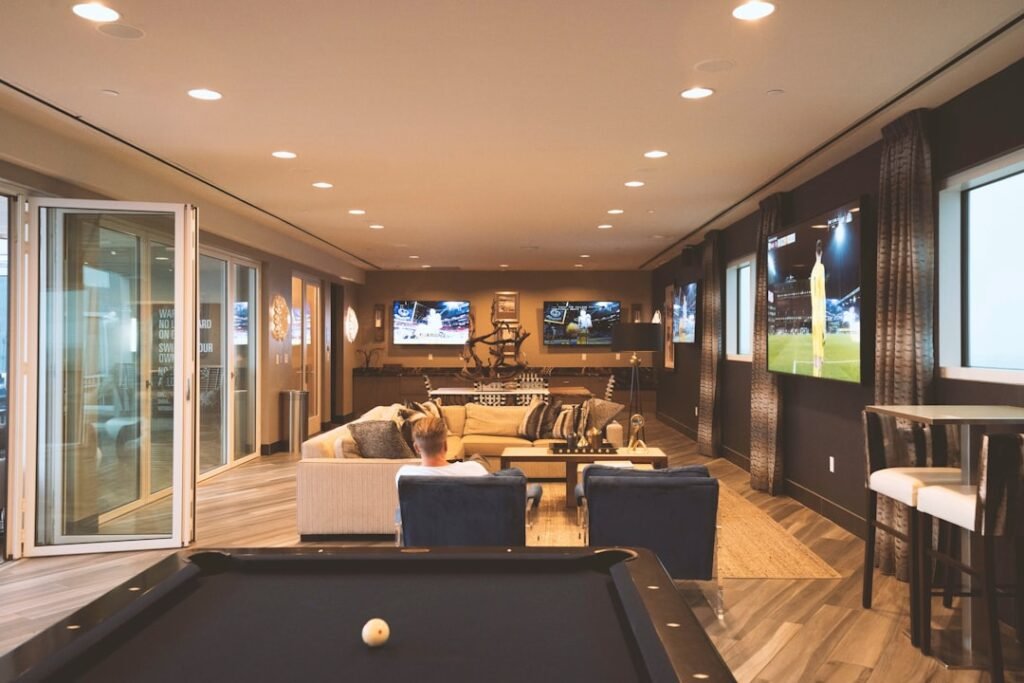
A home golf studio provides golfers with a dedicated practice space that eliminates weather and scheduling constraints. This setup offers several practical advantages, including convenient skill development opportunities and the ability to customize the environment according to individual requirements and preferences. A well-equipped home studio can accommodate various activities such as swing practice, putting drills, and recreational play.
Home golf studio configurations vary significantly based on budget considerations. Entry-level setups typically consist of basic hitting nets and practice mats, providing an affordable solution for swing practice. Mid-range options may include launch monitors and improved surfaces, while premium installations can feature advanced golf simulators with high-definition projectors, professional-grade sensors, and comprehensive course libraries.
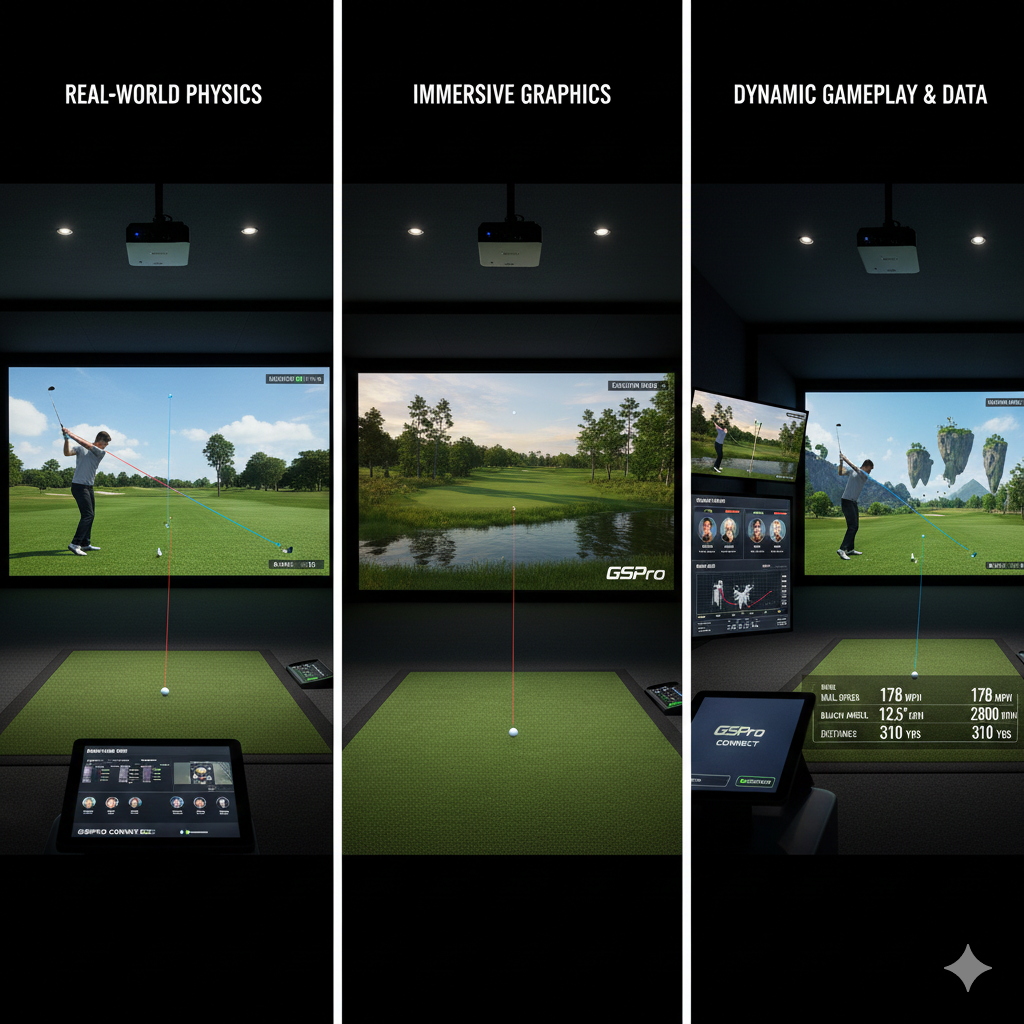
These high-end systems can replicate playing conditions from renowned golf courses worldwide and provide detailed performance analytics. Budget allocations can range from a few hundred dollars for basic equipment to tens of thousands for professional-grade simulator systems.
Key Takeaways
- A home golf studio offers convenience, skill improvement, and customizable setups for all budgets.
- Choosing the right space involves considering size, layout, and location within your home for optimal use.
- Essential equipment ranges from basic gear to advanced simulators, with step-by-step setup and calibration guidance.
- Soundproofing, safety measures, and personalized decor enhance the practice environment and user experience.
- Budget-friendly tips, maintenance advice, and membership benefits support long-term growth and enjoyment of your studio.
Choosing the Right Space for Your Home Golf Studio
Selecting the ideal location within our home for a golf studio is crucial to maximizing its potential. We should consider areas that offer enough space for our setup while also providing a comfortable atmosphere for practice. A basement or garage can be an excellent choice, as these spaces often have ample room and can be easily modified to suit our needs.
Alternatively, if we have a spare room or an outdoor area, these can also serve as great options for creating our personal golf haven. When evaluating the size and layout of the space, we must keep in mind the dimensions required for our equipment and practice activities. A minimum ceiling height of 10 feet is generally recommended for most simulators, while ensuring that there is enough room for our swing path is essential.
Additionally, we should think about how we want to arrange the space to facilitate different practice drills and activities. By carefully considering these factors, we can create an efficient and enjoyable environment that encourages us to spend more time perfecting our game.
Essential Equipment for Your Home Golf Studio

To establish a basic home golf studio, there are several essential items we need to consider. At the very least, we should invest in a quality hitting mat and a net to catch our shots. These items will allow us to practice our swing without worrying about damaging walls or furniture.
Additionally, a launch monitor can provide valuable feedback on our performance, helping us identify areas for improvement. A putting green is another great addition, enabling us to work on our short game right at home. For those looking to elevate their home golf studio experience, advanced equipment options abound.
High-quality simulators can provide realistic gameplay experiences, complete with virtual courses and detailed analytics on our performance. We might also consider incorporating video analysis tools that allow us to record and review our swings, providing insights that can lead to significant improvements. By investing in these advanced tools, we can create an immersive environment that not only enhances our skills but also makes practicing more enjoyable.
Setting Up Your Simulator
Installing a golf simulator in our home studio may seem daunting at first, but with a step-by-step approach, we can make the process manageable and straightforward. First, we need to choose the right simulator that fits our space and budget. Once we have selected our equipment, we should carefully follow the manufacturer’s instructions for installation.
This typically involves setting up the screen or projector, positioning the sensors or cameras correctly, and connecting everything to a computer or console. After installation, calibrating and optimizing the simulator is crucial for accurate performance. We should take the time to adjust settings based on our swing characteristics and ensure that the simulator is properly aligned with our hitting area.
Regularly checking for updates and recalibrating as needed will help maintain accuracy over time. By following these steps diligently, we can create an engaging and realistic golfing experience right in our own home.
Creating a Practice Area
| Component | Budget Range | Key Features | Estimated Setup Space | Recommended For |
|---|---|---|---|---|
| Golf Simulator | Low: 500 – 1500 Mid: 1500 – 4000 High: 4000+ | Accuracy, Software Compatibility, Realistic Graphics | 10 x 12 feet minimum | All levels, from beginners to pros |
| Launch Monitor | Low: 300 – 1000 Mid: 1000 – 3000 High: 3000+ | Ball Speed, Spin Rate, Launch Angle | 6 x 8 feet minimum | Players focused on swing data and improvement |
| Golf Mat | Low: 100 – 300 Mid: 300 – 700 High: 700+ | Durability, Realistic Turf Feel | 3 x 5 feet minimum | All budgets, essential for indoor practice |
| Net & Enclosure | Low: 100 – 400 Mid: 400 – 1000 High: 1000+ | Safety, Size, Portability | Varies by room size | Safety-conscious users |
| Lighting | Low: 50 – 150 Mid: 150 – 400 High: 400+ | Brightness, Even Coverage | Room dependent | Improves visibility and video quality |
| Additional Accessories | Low: 50 – 200 Mid: 200 – 600 High: 600+ | Camera Systems, Swing Analyzers, Projectors | Varies | Advanced users seeking detailed feedback |
Designing a dedicated practice area within our home golf studio is essential for focusing on different aspects of the game. We can create distinct zones for driving, chipping, and putting, allowing us to work on each skill set effectively. For instance, we might designate one corner of the studio for full swings with a hitting mat and net while setting up a putting green in another area where we can practice short putts and distance control.
Incorporating training aids and tools into our practice area can further enhance our skills. Items such as alignment sticks, swing trainers, and putting aids can provide valuable feedback and help us develop better habits. By thoughtfully designing our practice area and utilizing various training tools, we can create an environment that fosters improvement and encourages us to spend more time working on our game.
Soundproofing and Safety Measures

Minimizing noise and disturbances in our home golf studio is essential for maintaining a peaceful environment while practicing. We can implement soundproofing strategies such as adding acoustic panels or using heavy curtains to absorb sound. Additionally, placing rubber mats under our hitting area can help reduce noise from impact while also providing cushioning for our feet during practice sessions.
We should ensure that there is adequate space around our hitting area to prevent accidents or injuries from stray shots. Installing protective barriers or screens can provide an extra layer of safety for both ourselves and any bystanders.
By taking these measures seriously, we can create a safe and enjoyable environment for practicing golf at home.
Customizing Your Home Golf Studio
Personalizing our home golf studio allows us to create a space that reflects our unique style and passion for the game. We might consider incorporating decor elements such as framed photographs of memorable golfing moments or artwork that showcases iconic courses. Adding personal touches like custom signage or branding can also enhance the overall atmosphere of the studio.
Integrating technology and entertainment features into our home golf studio can further elevate the experience. We could install a sound system for playing music or even set up a television for watching golf tournaments or instructional videos while practicing. By customizing our space with these elements, we not only make it more enjoyable but also create an environment that inspires us to improve our skills.
Budget-Friendly Tips for Building a Home Golf Studio
Building a home golf studio doesn’t have to break the bank; there are plenty of budget-friendly options available. For those looking to save money on equipment, we can explore second-hand options or consider renting certain items before making a purchase decision. Additionally, many affordable training aids are available that can help us improve without requiring significant investment.
DIY projects can also be an excellent way to create elements of our home golf studio without spending too much money. For example, we could build our own putting green using inexpensive materials or repurpose furniture to create storage solutions for our equipment. By getting creative and resourceful, we can design a functional and enjoyable space without straining our finances.
Maintenance and Upkeep of Your Home Golf Studio
To ensure that our home golf studio remains in top condition, regular maintenance is essential. We should establish guidelines for cleaning and maintaining equipment, such as wiping down surfaces after each use and checking for any signs of wear or damage. Keeping our hitting mat clean and free from debris will also help prolong its lifespan.
Troubleshooting common issues is another important aspect of maintaining our home golf studio. If we encounter problems with our simulator or other equipment, consulting user manuals or online resources can often provide solutions. Additionally, staying proactive about repairs will help us avoid larger issues down the line.
By prioritizing maintenance and upkeep, we can enjoy a well-functioning home golf studio for years to come.
Benefits of a Home Golf Studio Membership
Joining a virtual golf community offers numerous advantages for home studio owners like us. These memberships often provide access to exclusive online resources such as instructional videos, webinars, and forums where we can connect with fellow golfers who share similar interests. Engaging with this community allows us to learn from others’ experiences while also sharing tips and advice on improving our game.
Furthermore, many virtual golf communities offer opportunities for friendly competition through online tournaments or challenges. Participating in these events not only keeps us motivated but also allows us to track our progress against other players from around the world. By becoming part of this community, we gain access to valuable support and resources that enhance our overall golfing experience.
Growing Your Home Golf Studio Over Time
As we continue to develop our skills and interests in golf, expanding and upgrading our home golf studio becomes an exciting prospect. We might start by adding new equipment or features that align with our evolving goals—whether that’s investing in advanced technology or incorporating additional training aids tailored to specific areas of improvement. Incorporating new technologies into our setup can significantly enhance the experience as well.
For instance, exploring virtual reality options or integrating fitness tracking devices can provide fresh insights into our performance while making practice sessions more engaging. By embracing growth opportunities within our home golf studio, we ensure that it remains a dynamic space that evolves alongside us as golfers. In conclusion, building a home golf studio is an enriching endeavor that allows us to immerse ourselves in the game we love while providing countless opportunities for improvement and enjoyment.
By carefully considering each aspect—from choosing the right space to customizing it according to personal preferences—we can create an environment that inspires us to reach new heights in our golfing journey.
FAQs
What is a home golf studio?
A home golf studio is a dedicated indoor space equipped with golf simulation technology, practice mats, nets, and other accessories that allow golfers to practice and play golf at home regardless of weather conditions.
What equipment do I need to build a home golf studio?
Basic equipment includes a golf simulator or launch monitor, hitting mat, impact screen or net, projector or display, and adequate lighting. Additional items may include a golf swing analyzer, seating, and storage for clubs and accessories.
Can I build a home golf studio on a budget?
Yes, home golf studios can be built to fit various budgets. Entry-level setups may use affordable launch monitors and nets, while high-end studios feature advanced simulators and custom-built rooms. Planning and prioritizing essential equipment helps manage costs.
How much space do I need for a home golf studio?
A minimum of 10 feet wide, 12 feet deep, and 9 feet high is generally recommended to comfortably swing a golf club and accommodate simulation equipment. Larger spaces provide more flexibility and a better experience.
Do I need special flooring for a home golf studio?
While not mandatory, durable and shock-absorbent flooring such as artificial turf or rubber mats is recommended to protect floors and provide a realistic feel when hitting golf shots.
Is it necessary to have a projector in a home golf studio?
A projector is commonly used to display the golf course simulation on a screen, but some setups use large monitors or TVs as alternatives depending on space and budget.
Can I use a home golf studio for practice only, or can I play virtual rounds?
Most home golf studios allow both practice and playing virtual rounds on simulated courses, providing a comprehensive golfing experience.
How do I ensure safety in my home golf studio?
Ensure the space has enough clearance for full swings, use impact screens or nets to catch balls, and keep the area free of fragile items. Proper installation of equipment and adequate lighting also contribute to safety.
What are the benefits of having a home golf studio?
Benefits include year-round practice regardless of weather, convenience, the ability to analyze and improve your swing with technology, and the opportunity to play virtual rounds with friends or solo.
Can beginners build a home golf studio on their own?
Yes, many beginners can set up a basic home golf studio by following guides and tutorials. However, professional installation may be beneficial for advanced equipment or custom rooms.
Pingback: Flooring Solutions for Your Golf Simulator: From Mats to Subfloors - Golf Edge Pro
Pingback: The Future of Home Golf: Emerging Tech (AI, VR) and What It Means for You - Golf Edge Pro
Pingback: The Virtual Caddie: Using Simulator Data to Plan Your On-Course Strategy | Golf Edge Pro
Pingback: The Putting Lab: Creating a Scientific Practice Green at Home - Golf Edge Pro
Pingback: Building a "Bespoke" Home Studio on a Budget: Smart Splurges and Savvy Saves - Golf Edge Pro
Pingback: Troubleshooting Common Golf Simulator Issues (And How to Fix Them) - Golf Edge Pro
Pingback: Connecting Your Home Studio: Online Leagues and Remote Play with Friends - Golf Edge Pro
Pingback: The 10-Minute Pre-Sim Warm-Up Routine (Prevent Injury) - Golf Edge Pro